Buwán ng Wikà: Wear Your Traditional Filipino Clothing
Thinking of what to wear for Buwán ng Wika socialization? Curious about traditional Filipino clothing? Find out what materials the Barong or Kimona is made of. Sign up for Aralin World lessons or Filipino reflections.
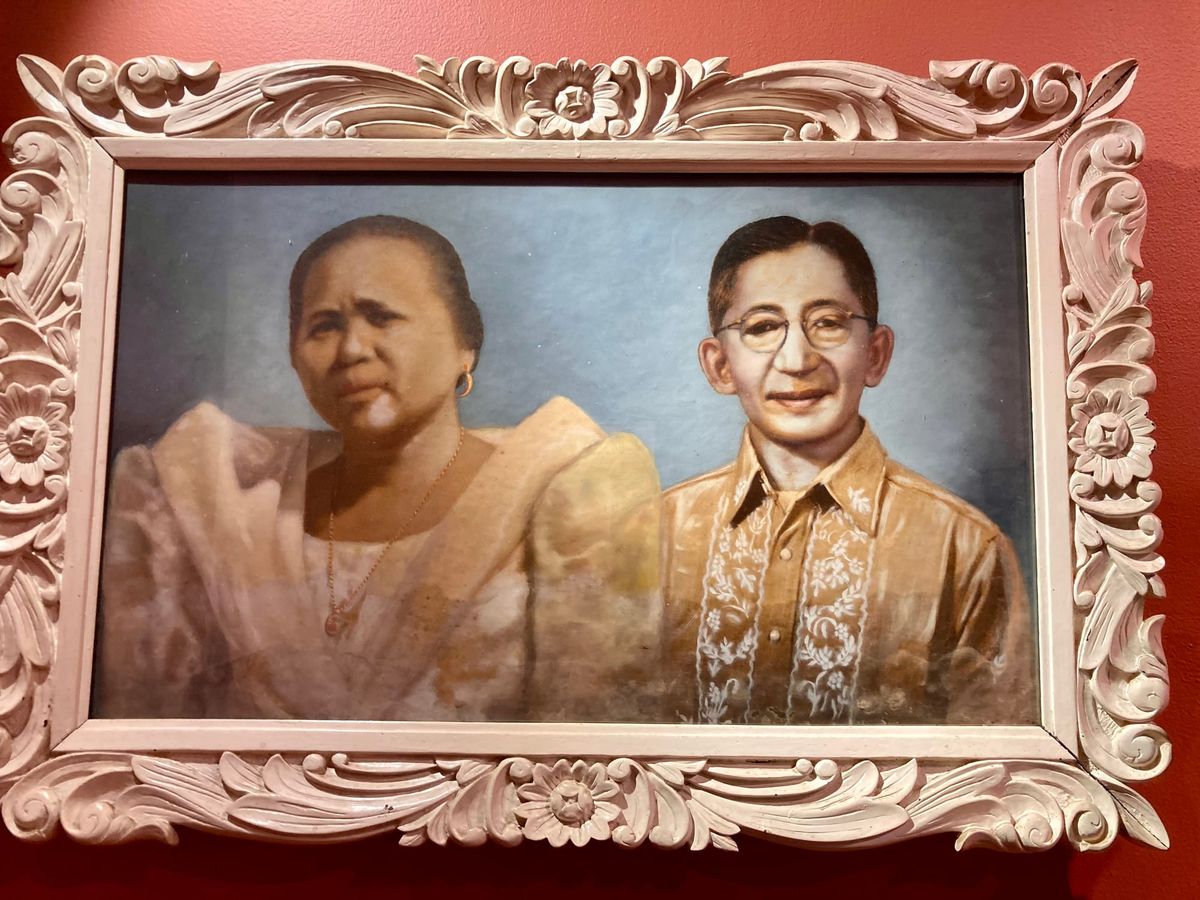
In this month of August, we at Aralin World are honoring the Filipino's Buwán ng Wika (language month). We join the entire Philippines in its call to strengthen the national language which is Filipino. While Filipino as a language deserves to be discussed separately, Tagalog (as a language and people) could be difficult to distinguish and confusing to foreign observers.
Let's put aside those various nuances, but for now let's study the field of traditional clothing in the Philippines.
Clothing in the tropical Philippines, for both male and female, for both children and adult, should be light as possible. Wear it thin and loose. Climate is hot and humid almost throughout the year so dresses are worn to carry off your perspiration.
Depending on how much you can afford, and on which occasion to go, choose fabrics like linen, cotton, or anything made from natural fiber. As you understand the culture, and for Buwan ng Wika celebrations, you may attend a cosplay and consider looking for sets of garments made from hemp, silk, abaca, or ramie.
Baróng Tagalog
These days, Baróng Tagalog is a type of formal wear. Depending on price value and the purpose of wearing them, this garment can be made from abaca fiber, banana fiber, pineapple leaf fibers, or silkworm cocoons.
Husi is the local term to refer to pineapple leaf fiber or any textile made from natural fiber. Pinya is the Tagalog term for 'pineapple'. Thus, people specifically describe this garment as 'husi baróng'.
The following are classifications of husi:
- Traditional husi - made out of plant fibers like abaca fiber or banana leaf silk
- Evolved husi - blend of silk and banana fibers
- Modern husi - silk blended with synthetic fibers also known as organza
- Pinya husi - woven from pineapple leaf fibers
- Pinya seda - blend of pineapple leaf and silkworm cocoons
- Seda - pure silkworm cocoon fibers
Baróngs are transparent, with gaps between interwoven threads making the textile a good canvas for embroidery. Intricate embroidered baróng is a statement of Filipino ingenuity and culture.
Kamisa
Kamisa is a collarless, round scoop, with two or three buttons at the neckline. It is made from soft, thin, breathable cotton fibers. It comes either in short-sleeve or long-sleeve variant. This serves as an undergarment with Barong Tagalog on top of it.
A variant of kamisa is worn by working class individual. Join a cosplay inspired by Andres Bonifacio and his Katipunan members wearing a plain white kamisa with a red scarf tied around your neck.
Kimona
Just like Baróng Tagalog, kimona is also a lightweight, transparent outer garment using textiles of natural fiber. It is embellished to express feminine spirits. It can be embroidered or adorned with lace, sequins, pearls, or precious gems.
It's just a top garment so it requires a bottom piece to match the period one may wish to portray. Don't forget: an undershirt is necessary.
Patadyóng
A good garment to match the kimona, patadyóng is a high-waisted wrap-around skirt. The fabric is traditionally woven using colorful cotton threads. It's a tube-like piece of clothing available for both men and women. It's known for checkered patterns with vibrant colors, covering one's waist down to his/her ankle.
Tapis
Tapis is similar to patadyóng, only that it covers a woman's body from waist down to her knees. It comes in basic rectangular hand-woven piece of cloth to wrap around the bottom part of the woman's body.
Bahág
Bahág is made from barkcloth or from woven textiles with color and quality indicative of one's status. It is the most basic covering for men.
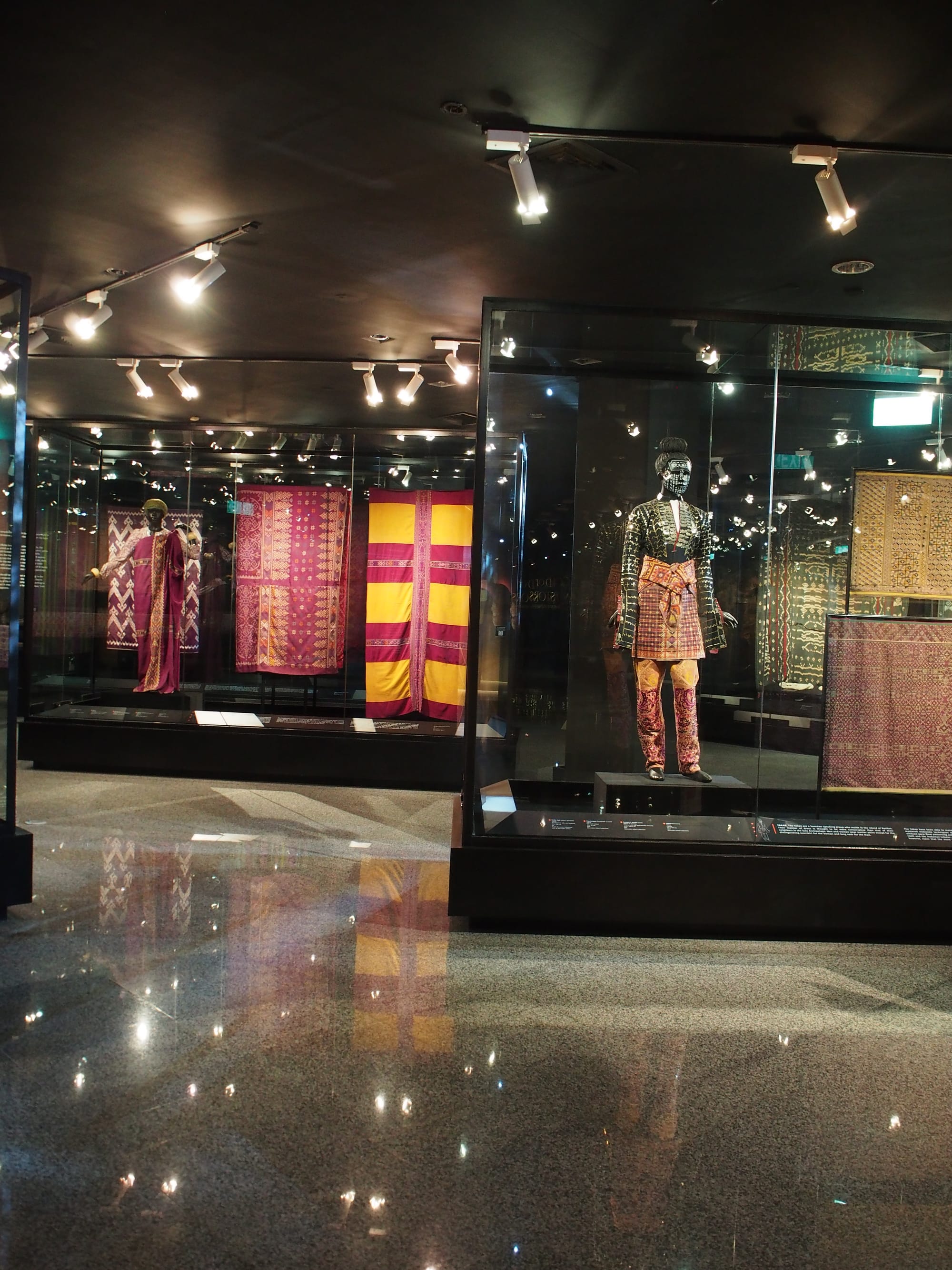
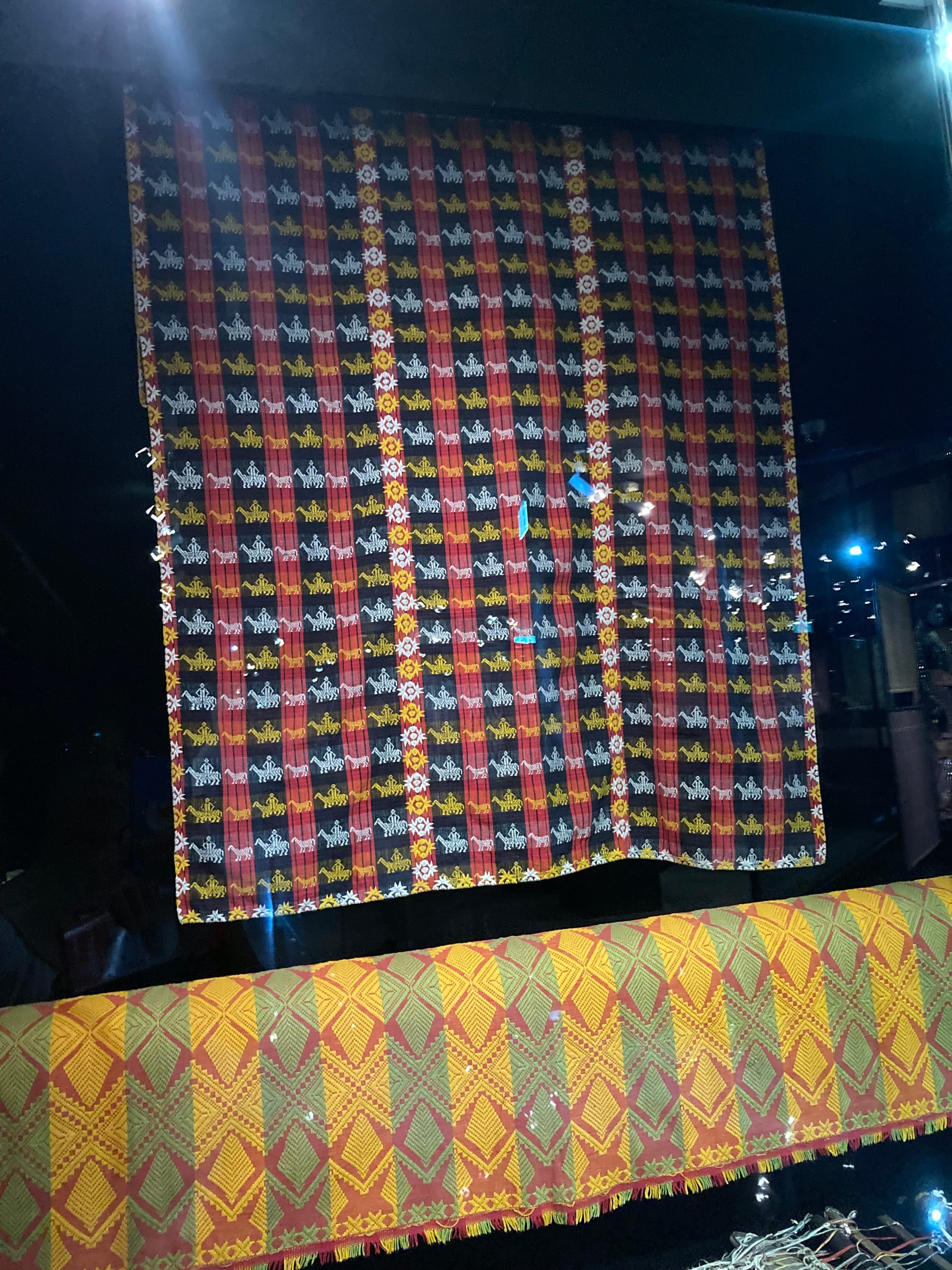
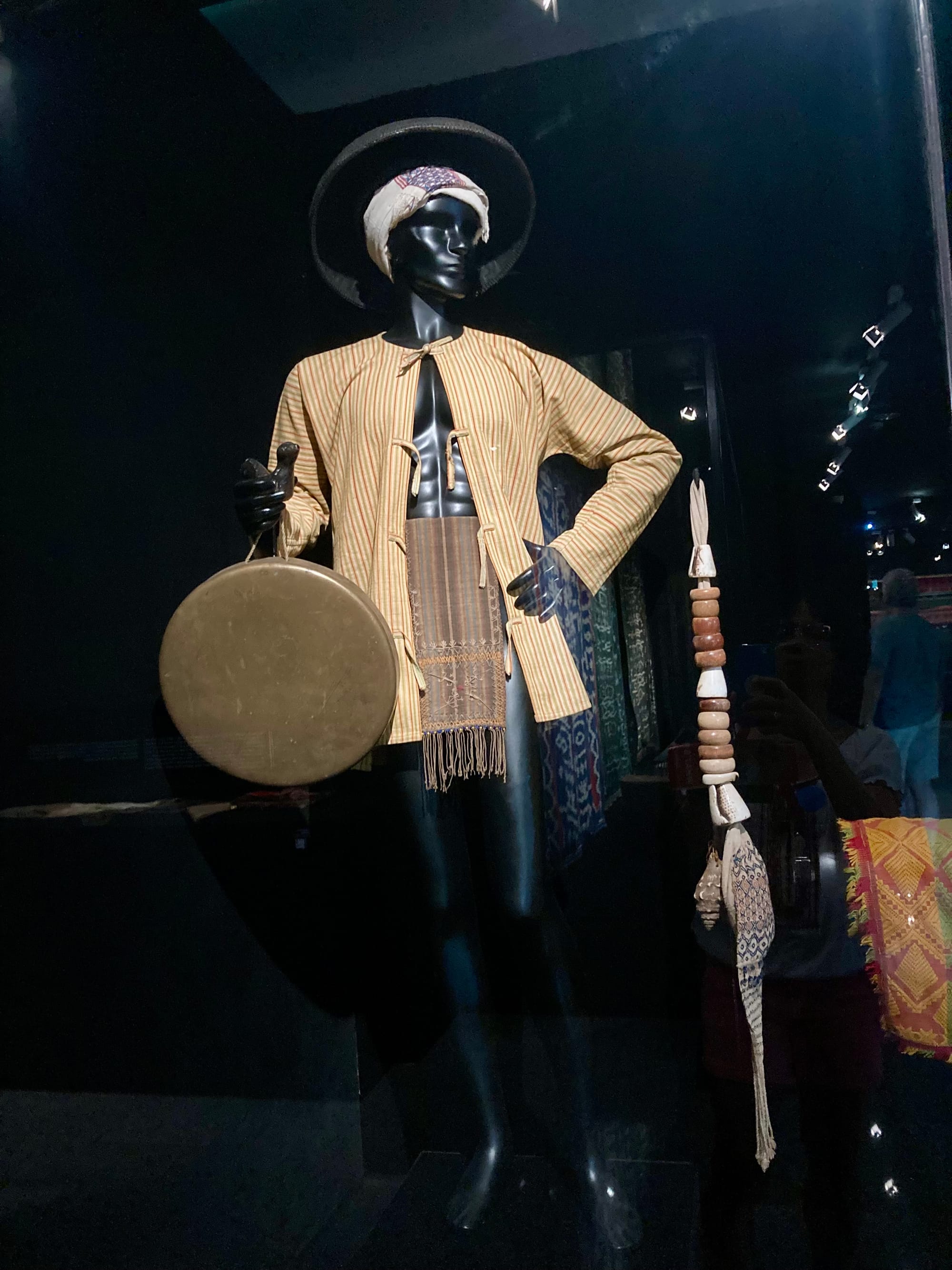
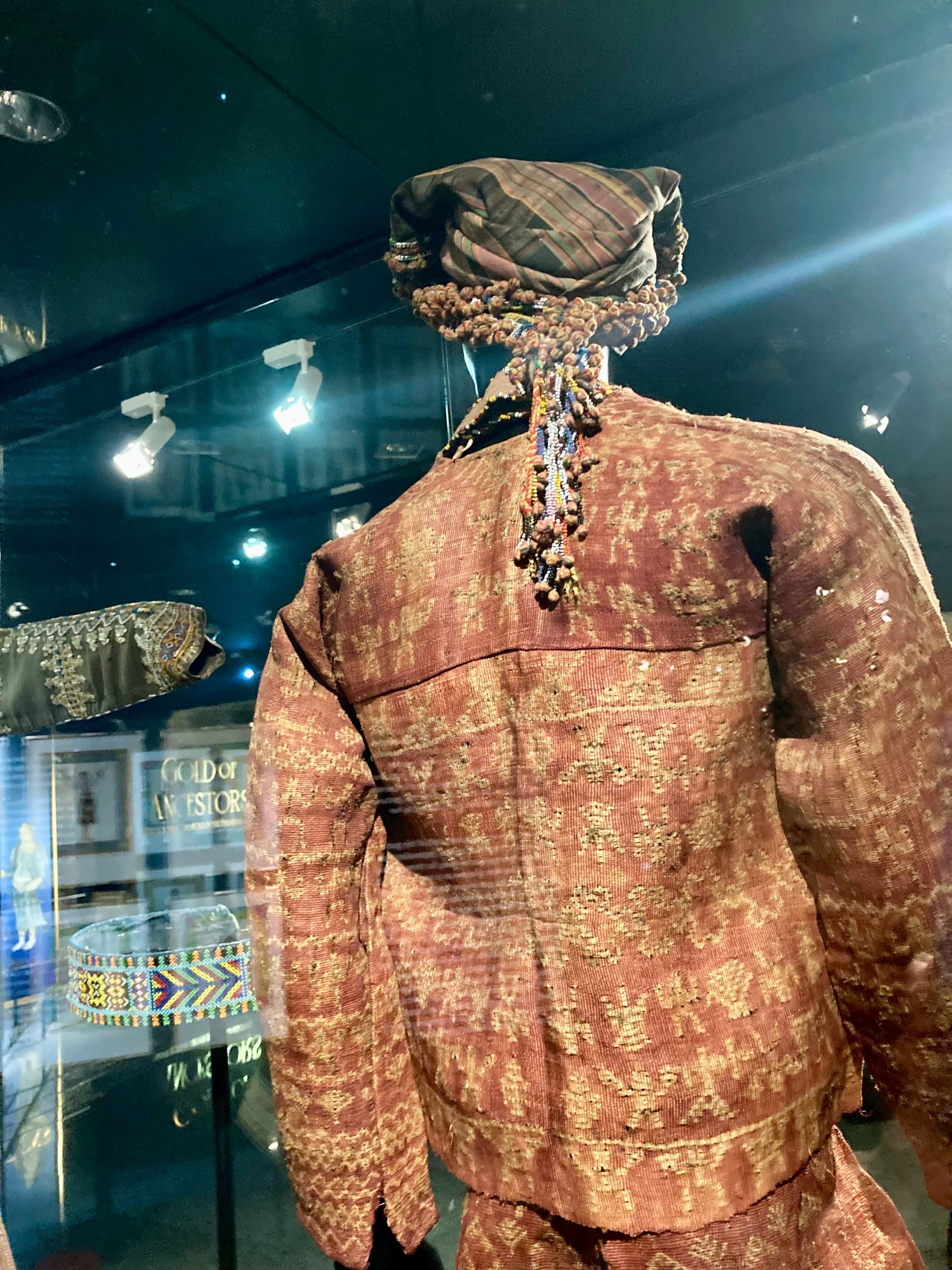
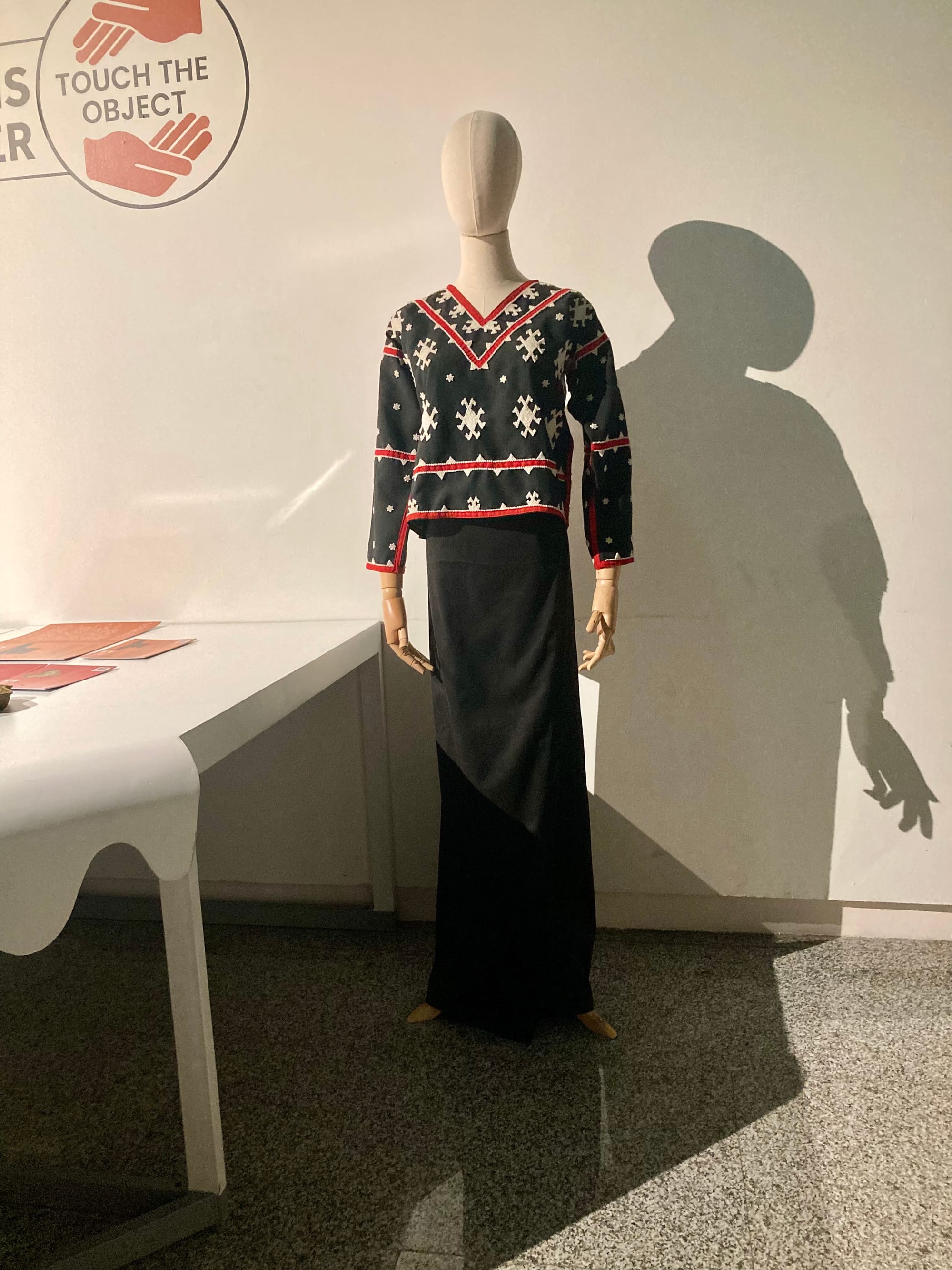
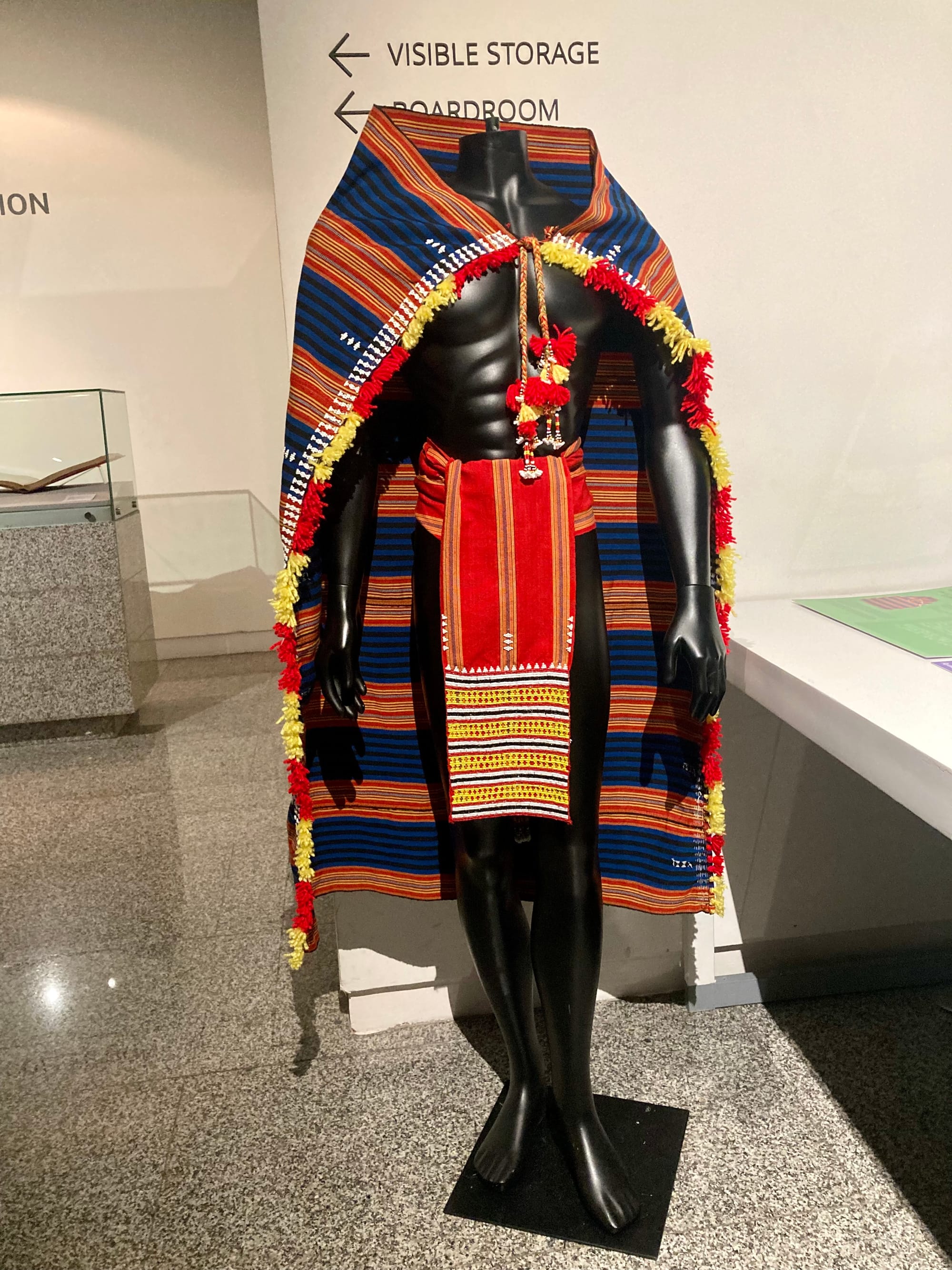
Combined photo collections of exhibits at Ayala Museum and National Museum in the Philippines. Taken September 2023.
Additional Filipino Garments and Accessories
The indigenous Filipino look is not complete without other articles to serve particular purposes such as: to depict nobility, to protect from sun and rain, or to display status in the community.
Alampáy
Alampáy is a triangular piece of cloth which works similar to a shawl. The fabric should be made from pinya, husi, or seda but embellished with embroidery. Women wear alampáy on top of their kimona.
Panwelo
Panwelo is the evolved version of alampáy during the Spanish occupation in the Las Islas Filipinas (old name for the Philippines). It's larger than alampáy that comes as a huge square shape cloth folded into a triangle before wearing. Like alampáy, it's also adorned with embroidery
Kalumbigas
Kalumbigas refers to large armlets, bangles, or bracelets typically made of gold, brass, or other metals.
Putong
Putong is a narrow strips of cloth bound around one's foreheads and temples.
Pudong-pudong
Pudong-pudong is a headdress worn like a headband or crown. A red pudong-pudong indicates that one has killed an enemy, and it's locally called 'magalong'.
Neck Ornaments
Filipino neck ornaments are heavy and thick in gold filigree. These are statements of regional indigenous craftsmanship with designs coming from various themes such as amulets, fertility, religious alliance, or heritage.
Salakót
Salakot is a cone or dome-shaped headgear worn as protection from the sun and rain. It's made from bamboo, rattan, nitò, or bottle gourd. This indicates a peasant lifestyle.
Bakyâ
Bakyâ is a footwear, also known as the wooden clogs. A specific variety of native wood such as santól or laniti is cut to the desired size and then shaven until smooth. A strap of cloth or any other natural material would be nailed on upper side of shaven wood to serve its purpose as a wearer's foot protection.
Other Local Terms Familiar To A Filipino Peasant
The following are articles that come in cheaper variety as they've been processed in its most original form, very basic and not necessarily embellished:
- Ramie is a type of natural fabric made from stalks of the Chinese nettle plant. People in the past complain that this material is hard and itchy to the skin.
- Katsa is another type of material for clothing. It comes in plain, natural, unbleached, open weave cotton fabric. Most popularly used as a flour sack or money bag.
- Karsonsilyo is the local term for 'boxer shorts'.
- Salawál is a loose knee-length or shin-length pants
- Saya is the local term for women's long skirt.
Task
Decide which clothing from above would speak most about you and then join Buwan ng Wika Get Together this year. Be there on Friday, August 14 at 10:30 AM (US East Coast time) or find your local time:
Time converter at worldtimebuddy.com
Late for the announcement? Don't worry. Simply leave your email here at Aralin World so you'd receive invitations to our upcoming events in the near future.
Conclusion
Now that we've identified a long list of traditional garment specifics, please realize that we're barely scratching the surface of this mind-blowing and fascinating Filipino styles, history, and culture. As a Tagalog native, I have yet to understand the various traditional clothing of regional tribes from north of Luzon down to the southern part of the archipelago in Mindanao.
I'm glad you've come this far. Whether you're attending our Buwán ng Wikà celebration, or looking for cosplay ideas, or considering to enhance your sense of fashion, or finding a new character to your unfinished novel: I hope you've found Aralin World lessons like this helpful and inspiring.
Salamat po!

Comments ()