Tagalog Verb Groups Made Easy: 5 Must-Know Categories for Natural Speech (With Real-Life Examples)
Tired of ‘textbook Tagalog’? This guide breaks down 5 verb groups (mag, um, in, an, & i) so you can speak like a local—not mechanical. 🌟 Includes real-life example sentences! Perfect for Upper Beginners.

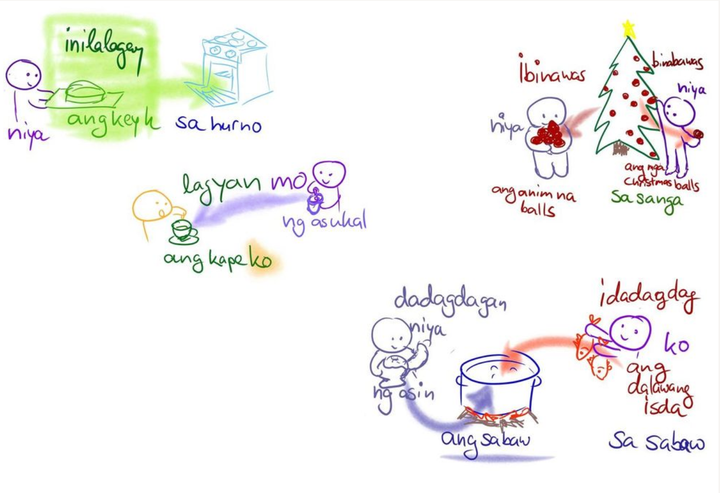
Speaking Tagalog like a toddler? Do not worry, you are not alone. Many learners find themselves stuck in memorizing verb conjugations, yet they struggle to apply them effectively in real conversations. The key lies in focusing on verb groups rather than transliteration.
A Quick Heads Up
This material is written for learners at the Upper Beginner Level. If you are new to this community, you might need a strategic approach to catch up with this lesson. Here’s a helpful resource:
 Authors

There are 2 ways to start working with Albine: Self-paced Tagalog Series & the Continuing Tagalog Program
Why Verb Groups Matter More Than Grammar Rules
Studying grammar rules can be a chore. If you are a westerner, remember that Filipino grammar rules are not the same as English grammar rules, and I challenge you to forget your primary language. 😀
As you expand your Tagalog vocabulary, you’ll be able to distinguish between verbs, adjectives, and nouns. You are doing an excellent job categorizing these words. While verbs can be challenging to use effectively, they can also be compartmentalized, which simplifies your learning process.
Grammar rules provide guidelines for correct usage, while verb groups enable the creation of patterns. However, real conversations necessitate the ability to construct sentences spontaneously. When engaged in a mid-conversation with a native speaker, relying solely on memorized rules becomes less efficient. Instead, it is more effective to tap into a pattern that your brain already possesses.
Objectives
At the end of this mini tutorial, you'll be able to:
- Determine if a root word is suitable for the five verb groups used by upper beginners in Tagalog.
- Identify the recurring patterns present in each of the five verb groups.
- Form simple sentences that convey your message clearly to your audience.